
AI Visibility for Local Businesses: Is ChatGPT Recommending Your Business?
Ask ChatGPT, Perplexity, Gemini, and Google's AI the question your customers would ask, "who's the best emergency plumber near me?", and you'll often get four different shortlists, with your business on some of them and missing from the rest. That gap is what AI visibility measures: how often AI engines name a business when someone asks them for a recommendation, in what position, and with which facts.
Most businesses already watch their spot in the local pack (the three map results Google shows above the organic listings), and agencies report on it for clients. Far fewer have looked at what the AI engines say, even though customers now ask them who to call. The good news is that the causes are knowable. Engines build their answers from what they read about a business, so a business that's missing usually has a fixable reason: absent from the directories the engines read, wrong facts on an old listing, or a website with nothing an engine can quote.
This guide works the same whether you run one business or manage twenty for clients. It shows you how to check by hand, read why the engines skip a business, fix the common causes, and decide when a manual check stops being enough. If you already check by hand and want it on a schedule, jump to what a tracking tool should report.
In this guide:
- Run the check by hand on one business
- Why AI answers don't follow the local pack
- Fixes for the four common causes
- Where manual checking breaks down
- What a tool should report
- A 30-day plan
Start with one business, six engines, and the questions customers ask
Before you pay for anything, or promise a client anything, run the check by hand once. It takes an afternoon for one business, and it shows you what the engines say today in a way no summary can.
Write the questions the way customers ask them
Customers don't type "plumber Austin" into ChatGPT. They ask full questions, often with a situation attached: "I have a burst pipe, which plumber can come today?" Write 10 to 20 of these for the business, spread across the ways people ask:
- Ready to buy: "Who is the best emergency plumber in Austin open right now?"
- Comparing: "Which Austin plumbers have the best reviews?"
- Learning: "How much does drain cleaning cost in Austin?"
- By name: "Is [business name] a good plumber?"
The by-name question matters more than it looks. It's the one a customer asks after a friend mentions the business, and it's where wrong facts and weak reviews show up first.
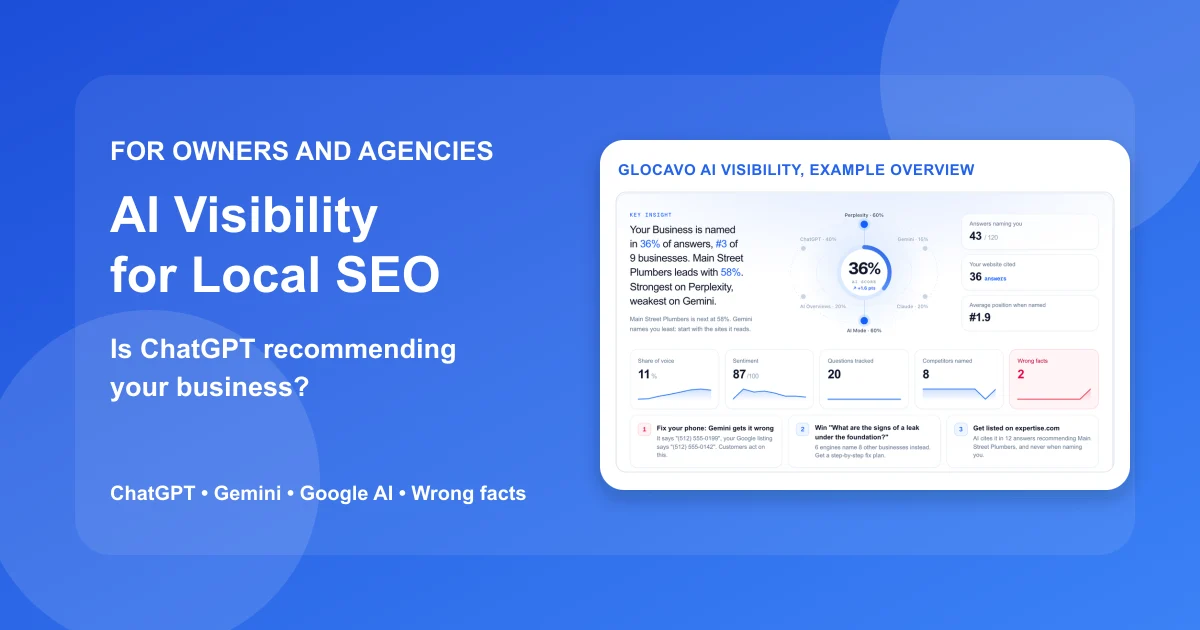
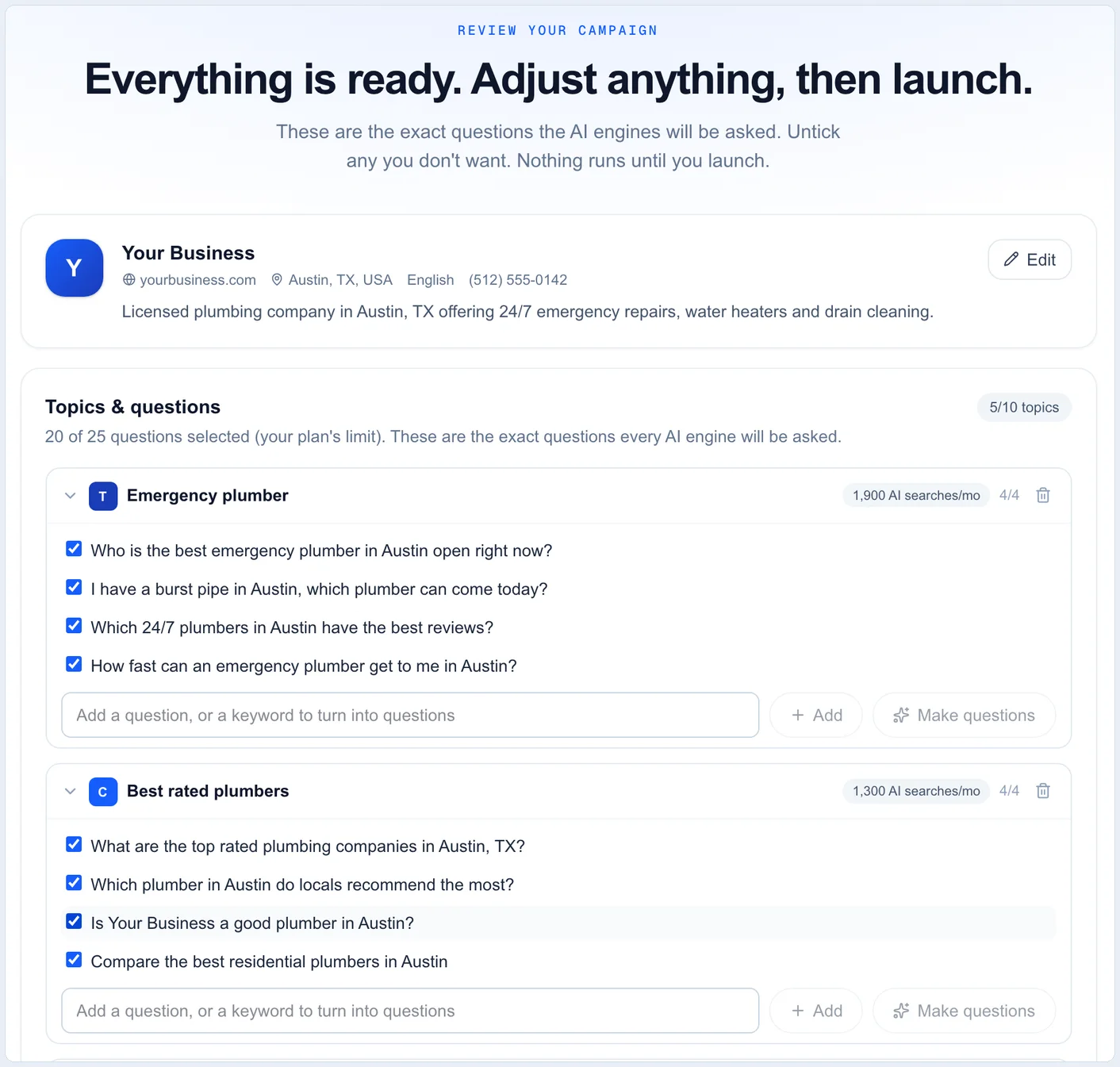
With a tracking tool, this step is mostly done for you. Glocavo's AI Visibility reads the business's Google listing, finds the topics customers ask AI about (with how many AI searches each one gets a month), and writes real customer questions for each topic, including the by-name one. You review the list, untick anything that doesn't fit, and add questions only someone who knows the business would think to ask. Later scans can also discover new questions you aren't tracking yet.
Ask every engine, from the business's city
Run each question on ChatGPT, Perplexity, Gemini, Claude, Google AI Mode, and Google AI Overviews. Put the city in the question, since you may not be searching from the market the business serves. Use a fresh, logged-out session where the engine allows it, so your own chat history and saved preferences don't shape the answer.
Expect the engines to disagree. They read different websites and weigh them differently, so a business can be the first name on Perplexity and absent from Gemini for the same question.
Record five things from every answer
For each answer, write down:
- Whether the business was named at all
- Its position in the list, if named
- Every business named instead
- The sources the engine cited, down to the page where it shows them
- Any fact it stated about the business: phone, hours, address, website, or whether it's open
Twenty questions on six engines gives you 120 answers. That's the baseline. It's also the first hint of why few people do this by hand more than once.
Why LLM visibility doesn't follow the local pack
A business can hold the top spot in the local pack and still be missing from AI answers. That surprises most owners, and it's worth understanding, because it changes what you work on.
Engines recommend from what the web says about a business
The local pack ranks Google Business Profiles using relevance, distance, and prominence. An AI answer works differently. When an engine gets a "who should I call" question, it usually searches the web first and builds its shortlist from what it reads: directories, review sites, "best plumbers in Austin" lists, forums, and the business's own pages.
Google describes the same mechanism for its own features. AI Overviews and AI Mode can use a "query fan-out": they issue several related searches across subtopics, then build a response with links to supporting pages. So a business that's strong on its profile but thin everywhere else gives the engines little to work with. That lines up with the 2026 data on AI search ranking factors, where presence on expert-curated lists ranked first.
This is the shift most people now call generative engine optimization (GEO): instead of only ranking pages, you shape what the engines read about a business, so they name it when they build an answer.
Each engine reads a different slice of the web
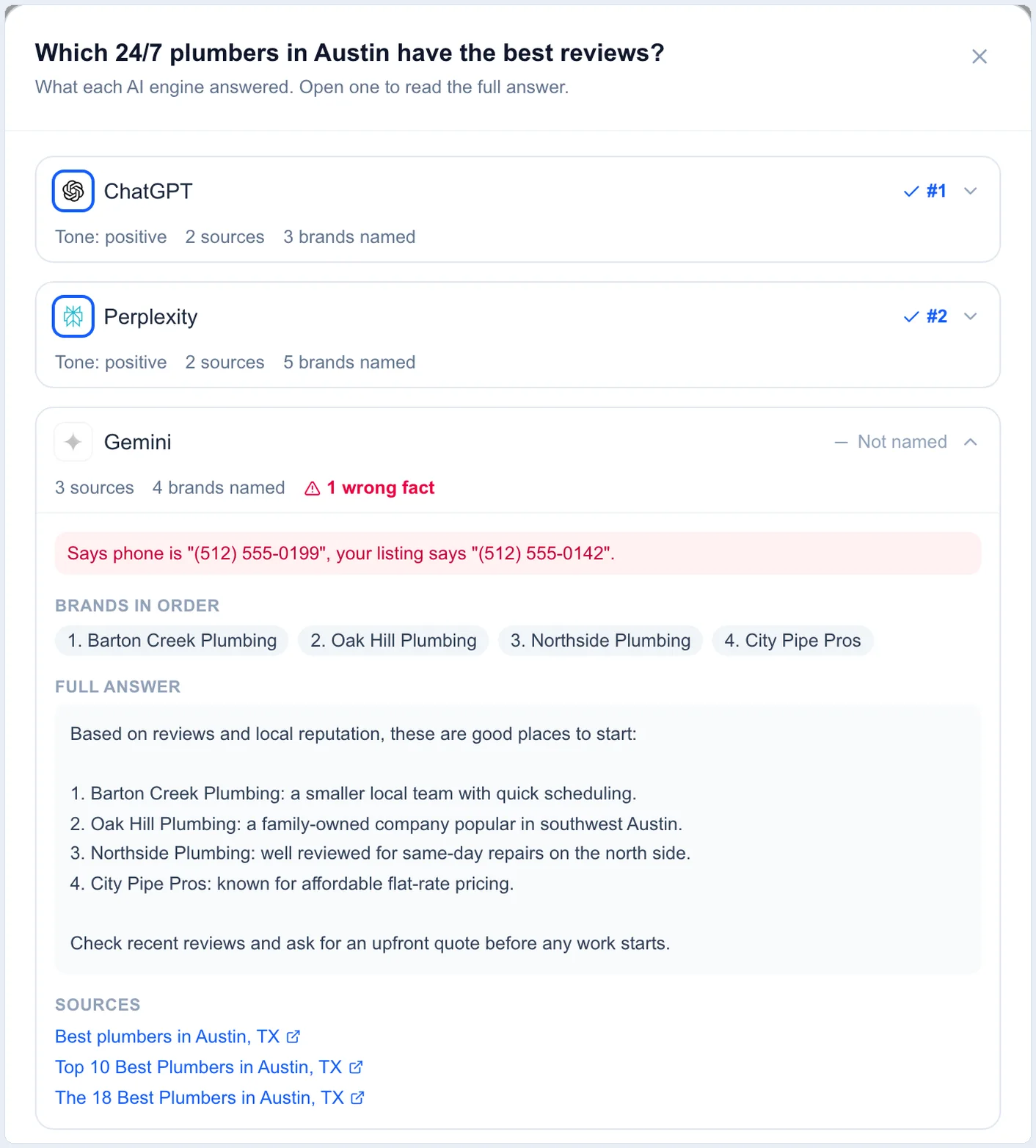
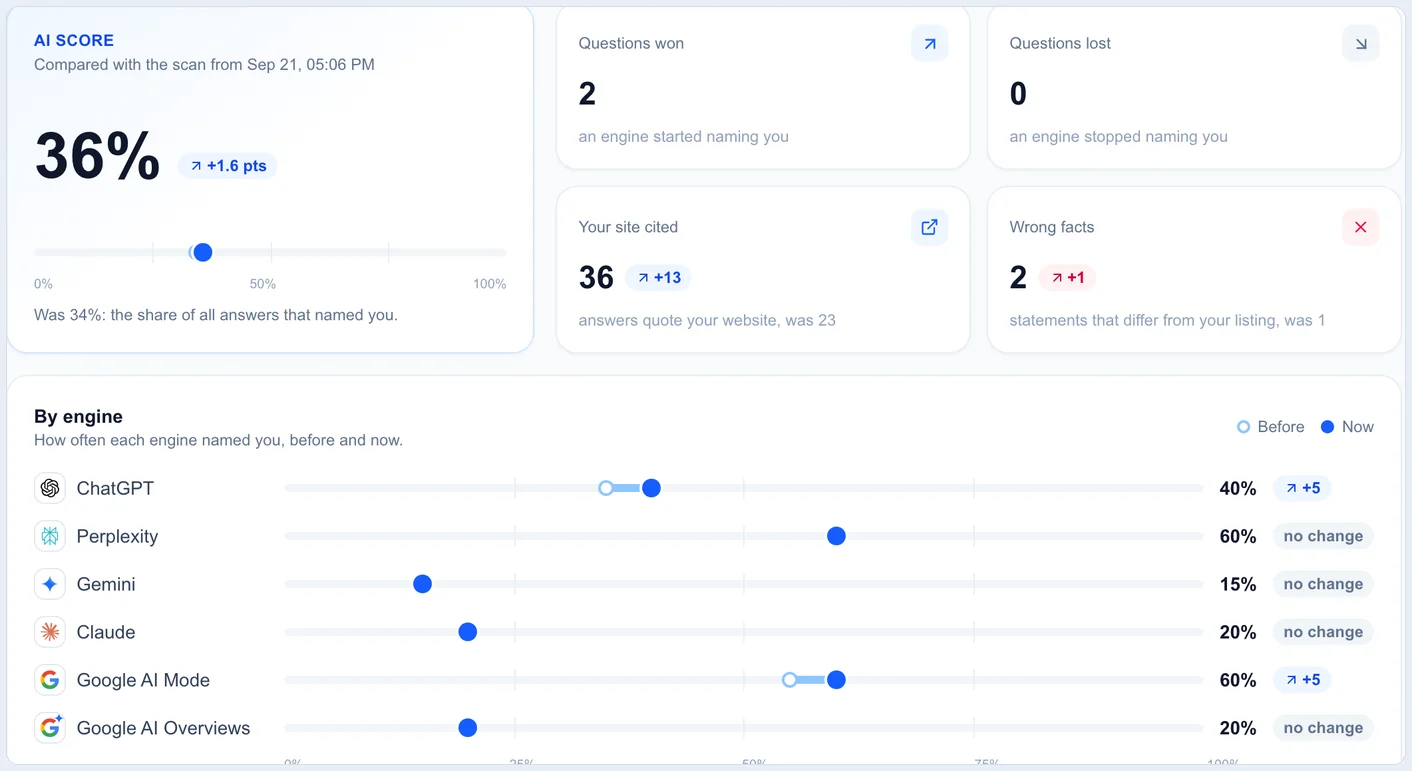
In an example campaign for an Austin plumber (demo data from our own app), Perplexity quoted the plumber's website in 10 answers while Gemini barely read it. Perplexity named the business in 60% of its answers. Gemini named it in 15%.
That isn't random. Each engine leans on its own mix of sources, so the fix for a weak engine starts with the sites that engine reads, not with general SEO work. This is why a per-engine view matters more than one blended score.
The same question can get a different answer tomorrow
AI engines rewrite their answers constantly. Ask the same question twice in a week and the order can shift, or a business can drop out entirely. Google says plainly that AI Mode and AI Overviews may use different models and techniques, so even its two features show different responses and links.
That means one check is a snapshot, not a result. Judge movement over three or four rounds of checks. If you report to a client, tell them that before the first report, not after a bad week.
How to rank in ChatGPT when it recommends a competitor
There's no setting that puts a business into an AI answer. What you can change is what the engines read. Most businesses that get skipped fall into one of four patterns, and each has a different fix.
Competitors are named from lists you're not on
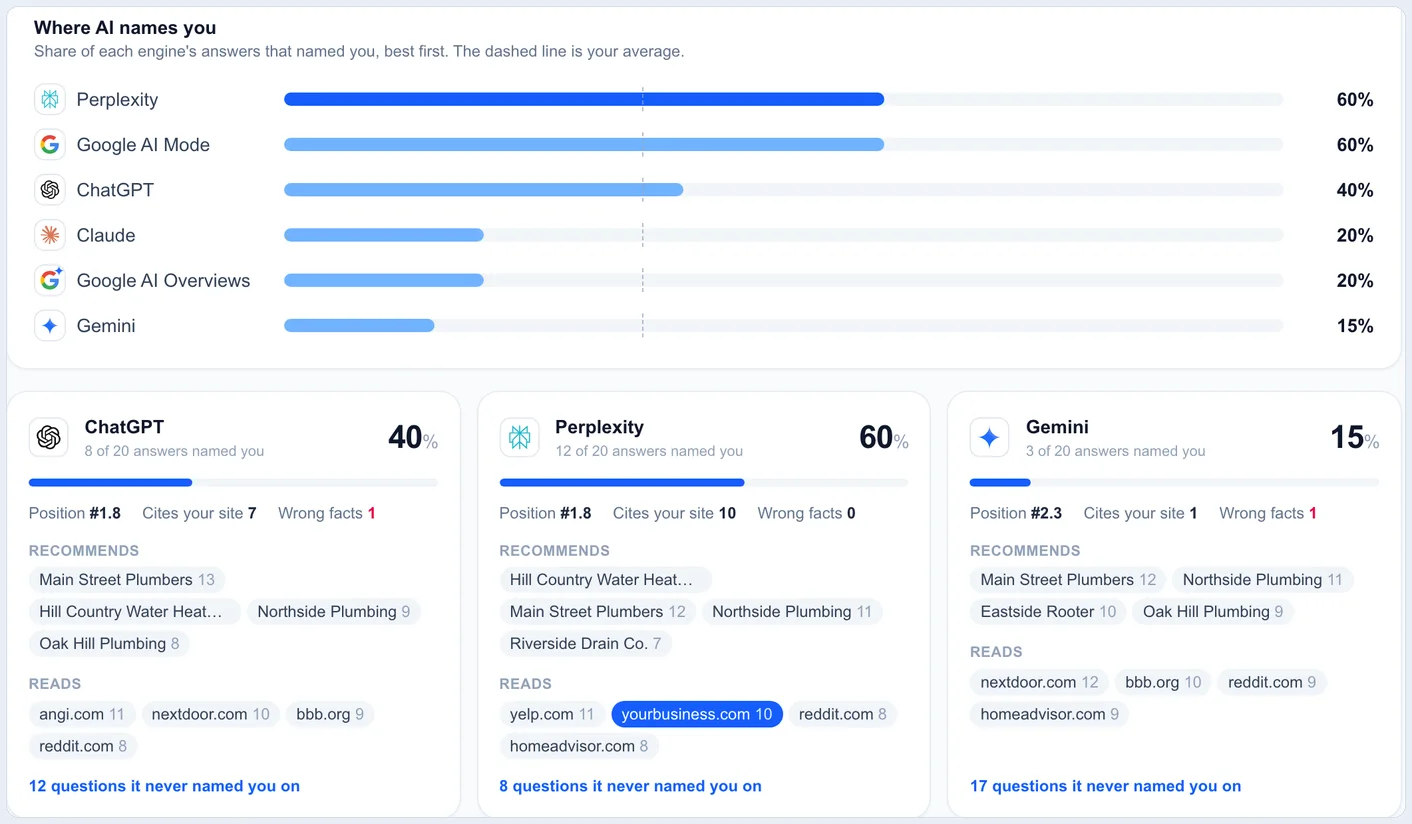
Look at the sources behind the answers that name competitors. In the Austin example, one directory site was cited in 22 answers and none of them named the plumber. It was a list of Austin plumbers the business simply wasn't on.
That's the most direct fix there is. Get the business listed, complete, and reviewed on the directories and "best of" lists the engines cite most, starting with the ones that come up next to competitors and never next to you. If you're already doing local citation building, this is the same work with a sharper target list: the sites the engines actually read, not a generic directory list.
The engine names you with the wrong facts
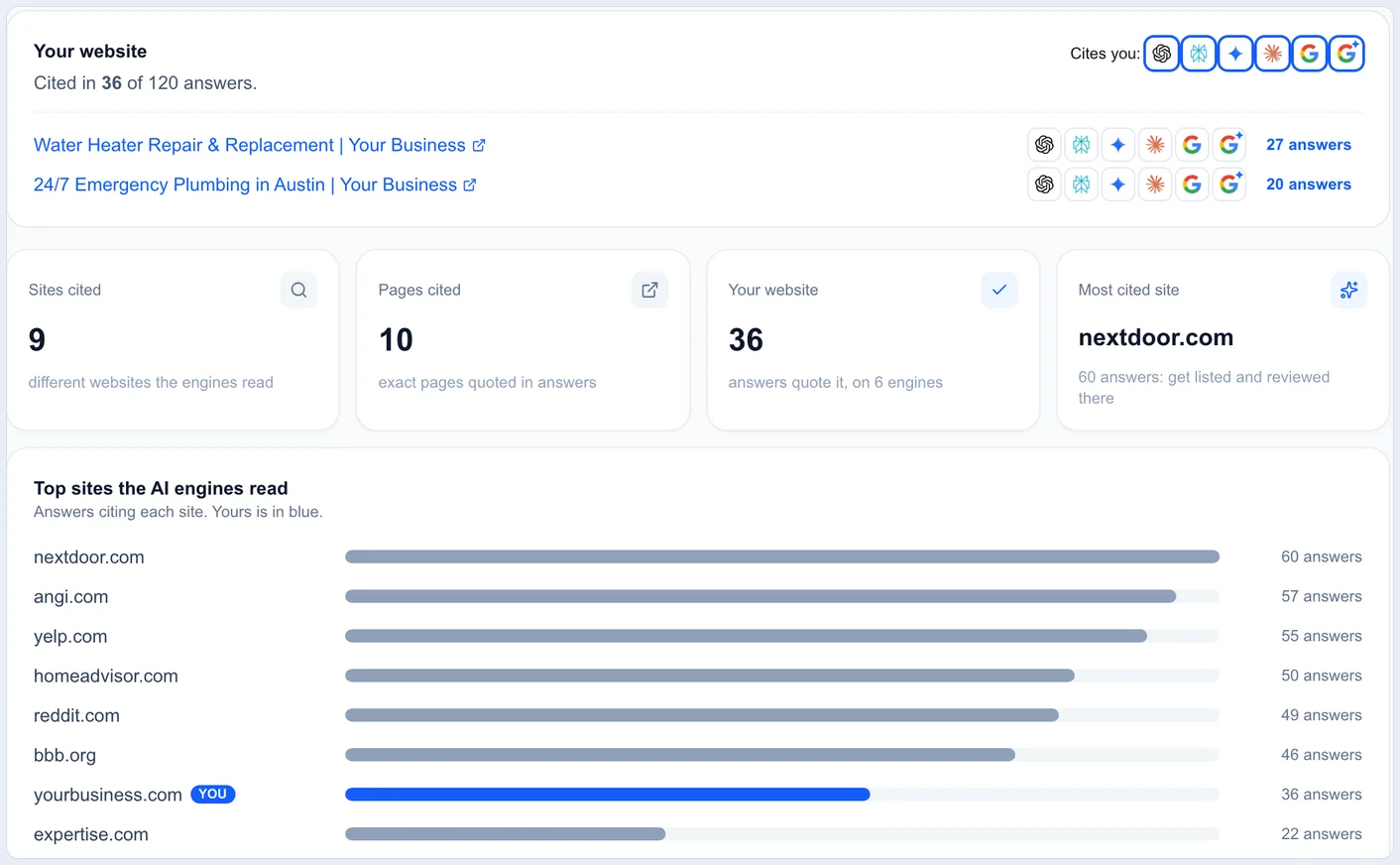
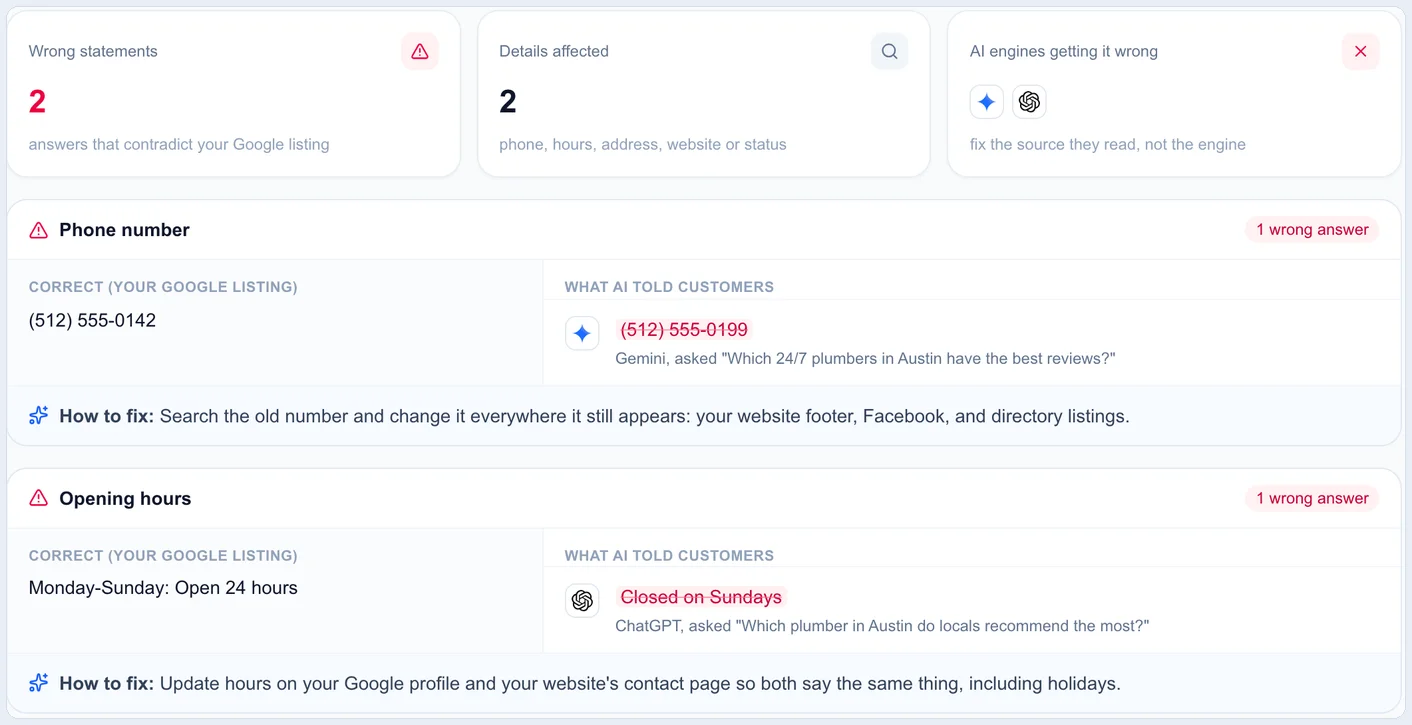
An answer that recommends a business with an old phone number is worse than no answer, because the customer acts on it. In the Austin example, Gemini gave a phone number that didn't match the Google listing.
You can't correct an engine directly, so fixing wrong facts in AI answers means fixing the pages it reads. Treat the Google Business Profile as the reference, search the old number or address in quotes, and change it everywhere it still appears: the website footer, social profiles, and old directory listings. Engines take time to pick up the change, so check again after a round or two.
Your website never gets quoted
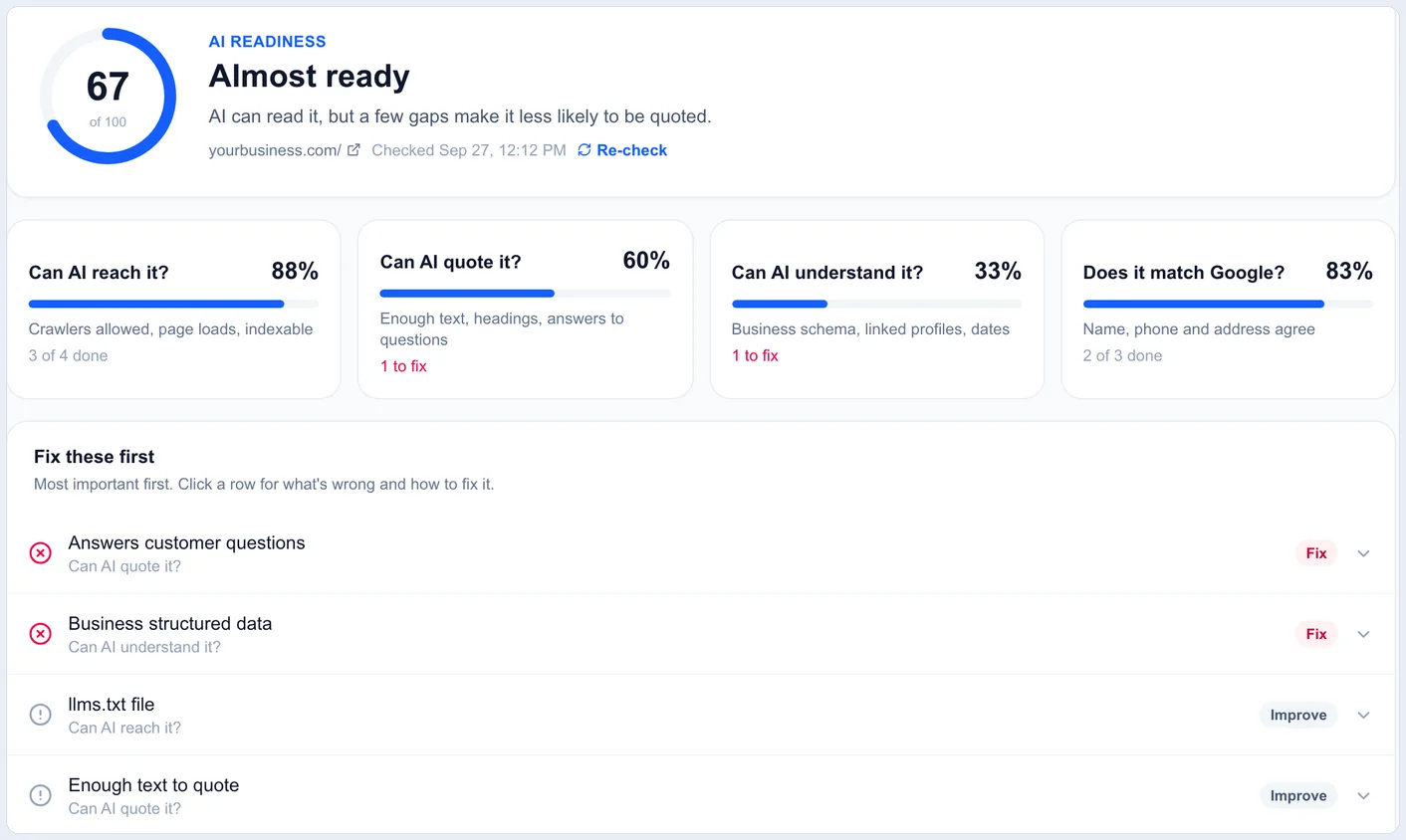
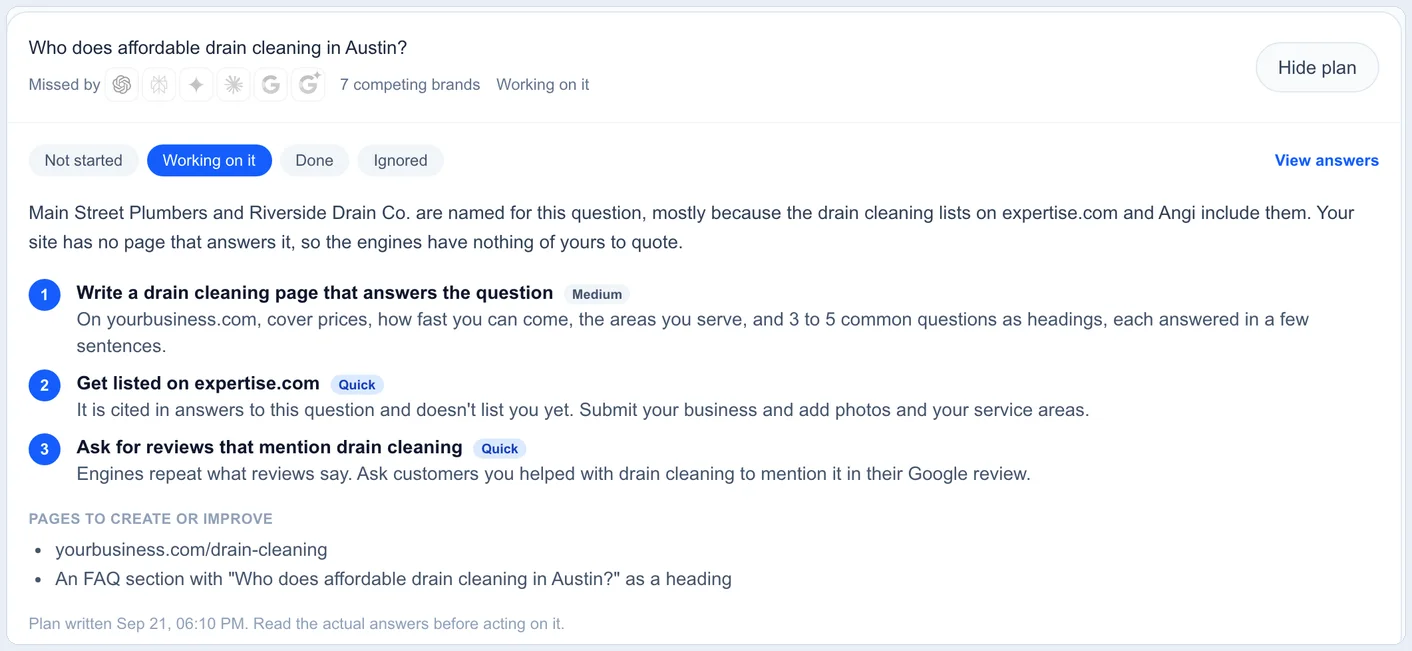
If competitors' pages get cited and yours never do, the site isn't answering the questions customers ask. A service page with a list of features gives an engine nothing to quote. A page that answers "who does affordable drain cleaning in Austin?" with prices, response times, service areas, and a few real questions as headings gives it something.
Check the technical basics too. Google's guidance on AI features says there are no special requirements for AI Overviews or AI Mode beyond normal SEO: the page must be indexed and crawlable.
Other engines run their own crawlers, so make sure robots.txt doesn't block them, and that the name, phone, and address on the site match the listing.
You get named, but described poorly
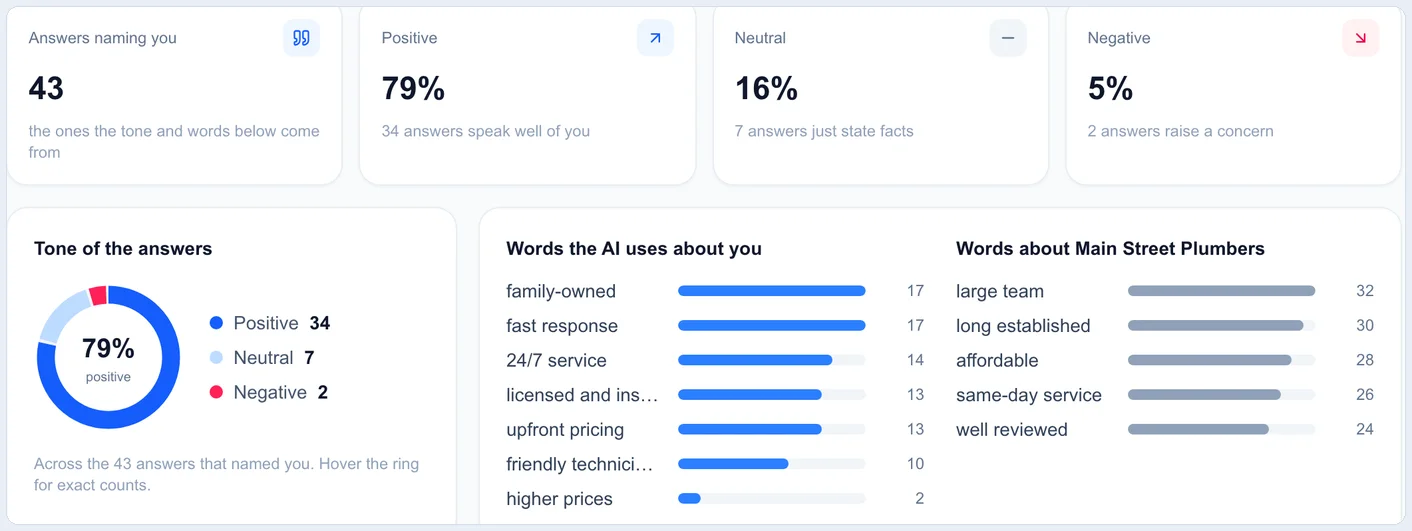
Sometimes the business is in the answer and the words are the problem. Engines repeat what reviews say. If reviews keep mentioning slow callbacks or high prices, those phrases show up in AI answers, and customers read them before they call.
The fix runs through reviews. Reply to the critical ones with specifics, and ask happy customers to mention the service they got ("fixed our water heater the same day") rather than leaving a one-word rating. Over time, the descriptions shift with the reviews.
Where checking by hand stops working
The manual check is worth doing once. As a weekly habit it gets heavy fast, even for a single business, and for an agency with a roster of clients it falls apart. The reasons are worth knowing before you decide how to track it.
The math, for one business or twenty
Every answer needs the same five things recorded, the facts compared with the listing, and the sources logged. Here's how the count grows with 20 questions per business on all six engines:
| Businesses tracked | Answers per round | Answers per month (weekly checks) |
|---|---|---|
| 1 | 120 | 480 |
| 5 | 600 | 2,400 |
| 10 | 1,200 | 4,800 |
| 20 | 2,400 | 9,600 |
A single owner checking weekly is already reading close to 500 answers a month. Cutting questions or engines to save time weakens the data where it matters most. The by-name question and the weakest engine are often the first casualties, and they're exactly where the fixable problems sit.
No history means no proof
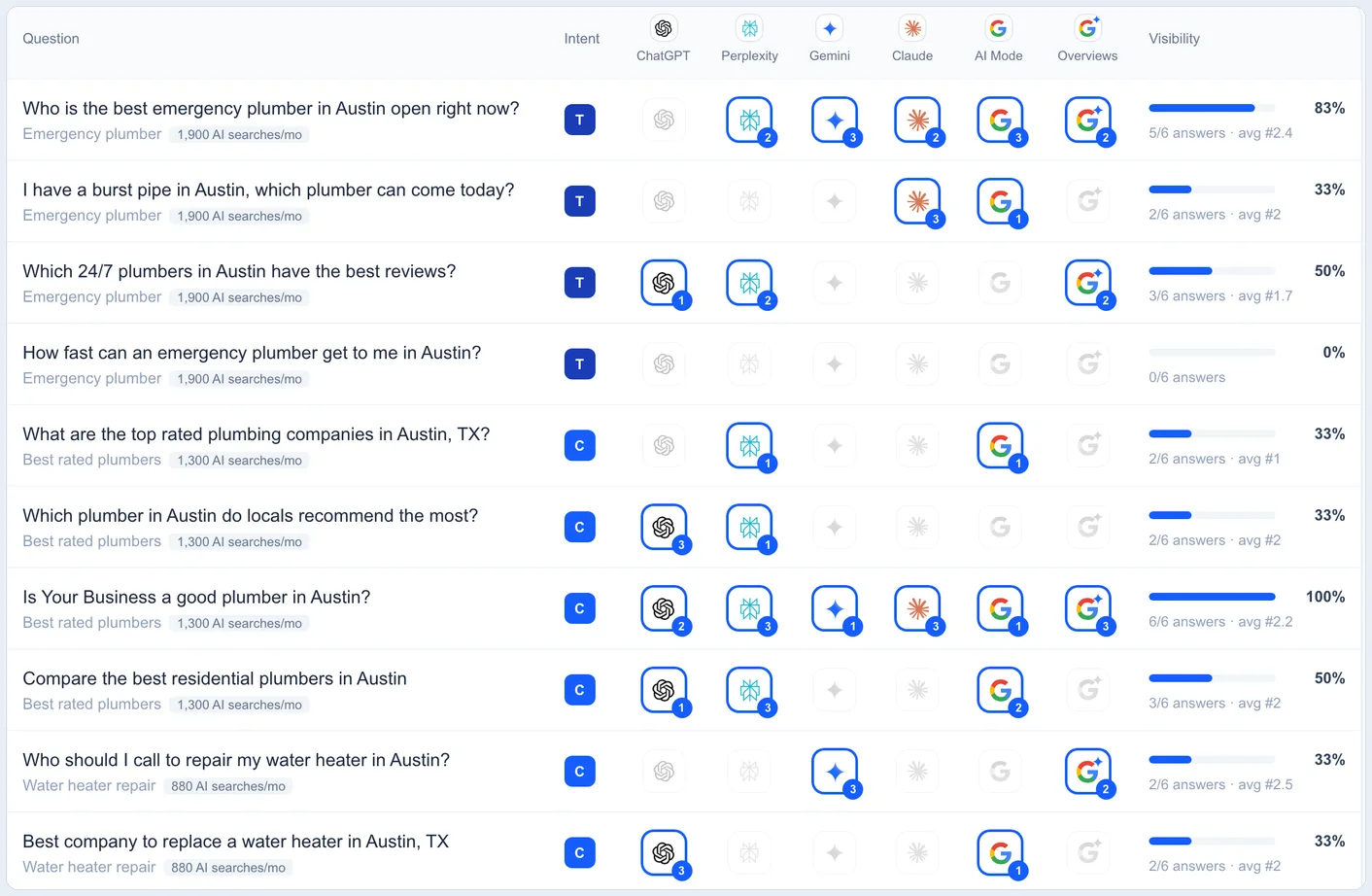
The bigger problem is history. Because answers shift from week to week, the value is in the trend: which questions you started winning, which engine moved, which competitor appeared. A spreadsheet of one-off checks can't show that cleanly, and building the comparison by hand each month is where the hours go.
An owner wants to know whether the work paid off. An agency's client wants proof before renewing. Either way, you need to be able to say "named in 34% of answers last month, 36% now, and here are the three questions we won."
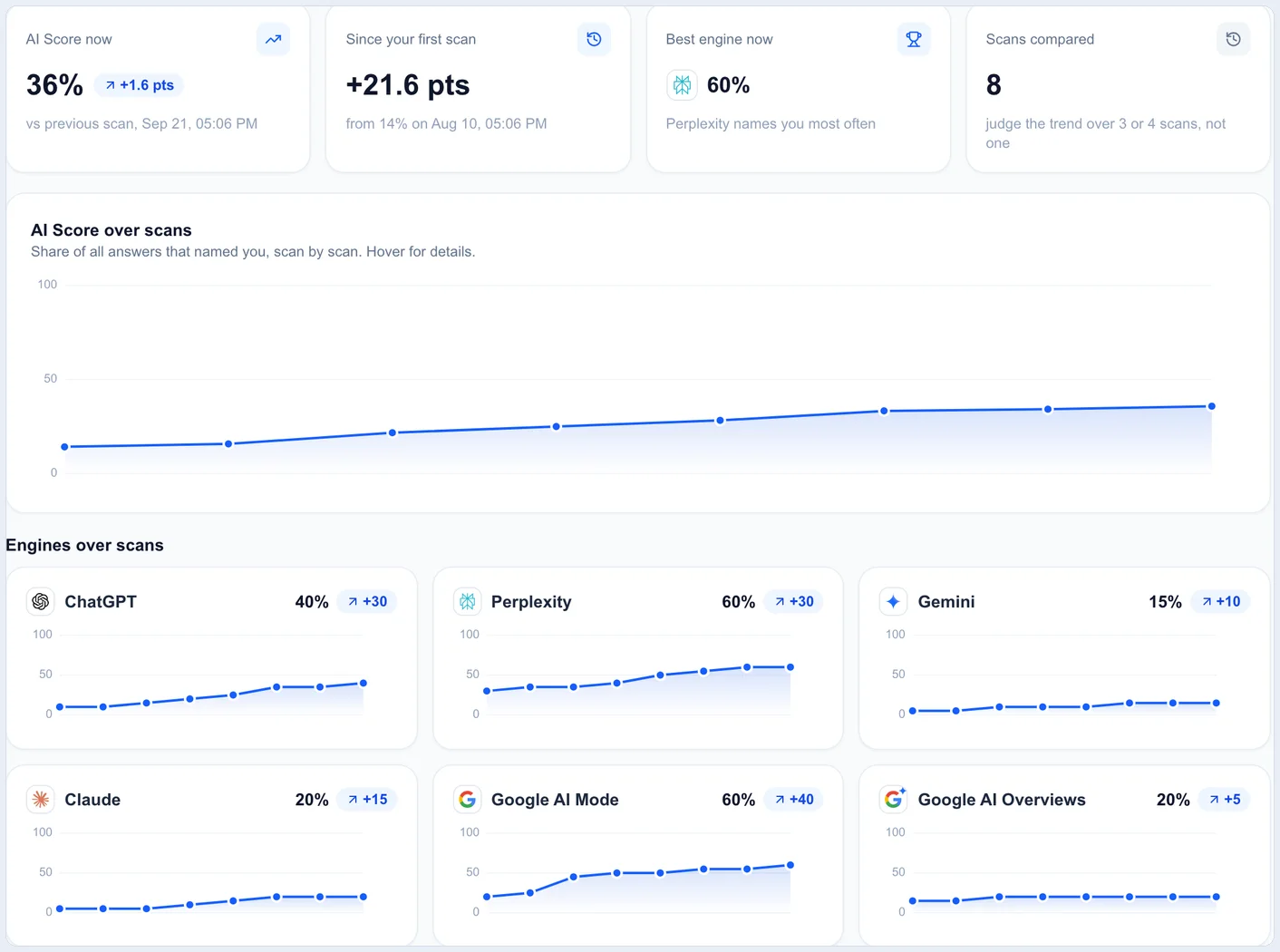
What an AI visibility tool should report for each business
If you're evaluating tools, judge them on whether they give you the data you collected by hand, plus the history you can't keep by hand. Many of the tools on the first page of Google for this term are built around national brand tracking. For a local business, look for the following.
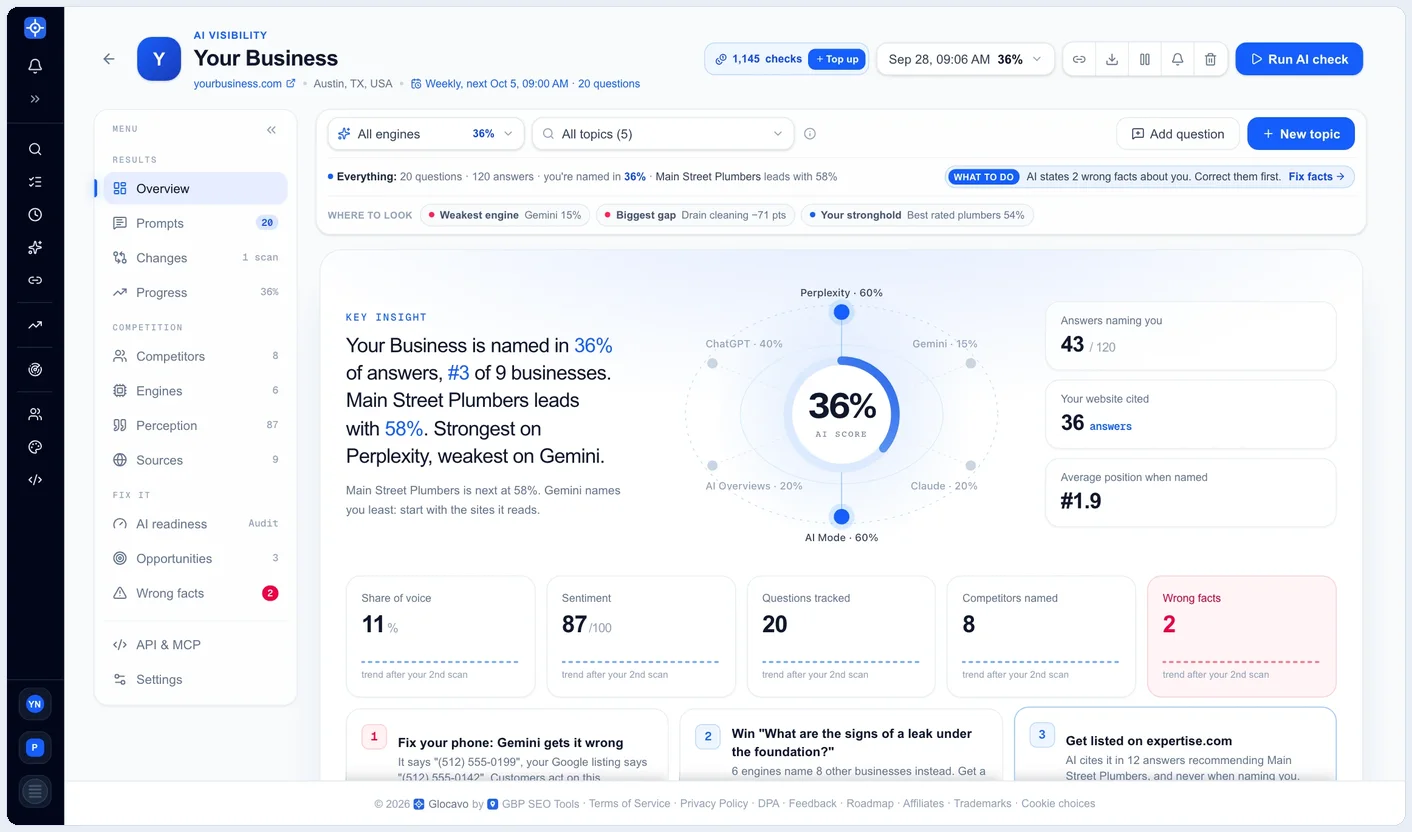
Every question, every engine, and the full answer
The tool should ask real customer questions, not just track keywords, across every engine your customers use. You want each engine's full answer, the business's position in it, and the businesses named instead. A score without the answers behind it can't tell you what to fix.
Check that it starts from the business's actual Google listing and location, and that it lets you edit the questions. Generated questions are a good start. The ones you add from knowing the business are often the ones that matter.
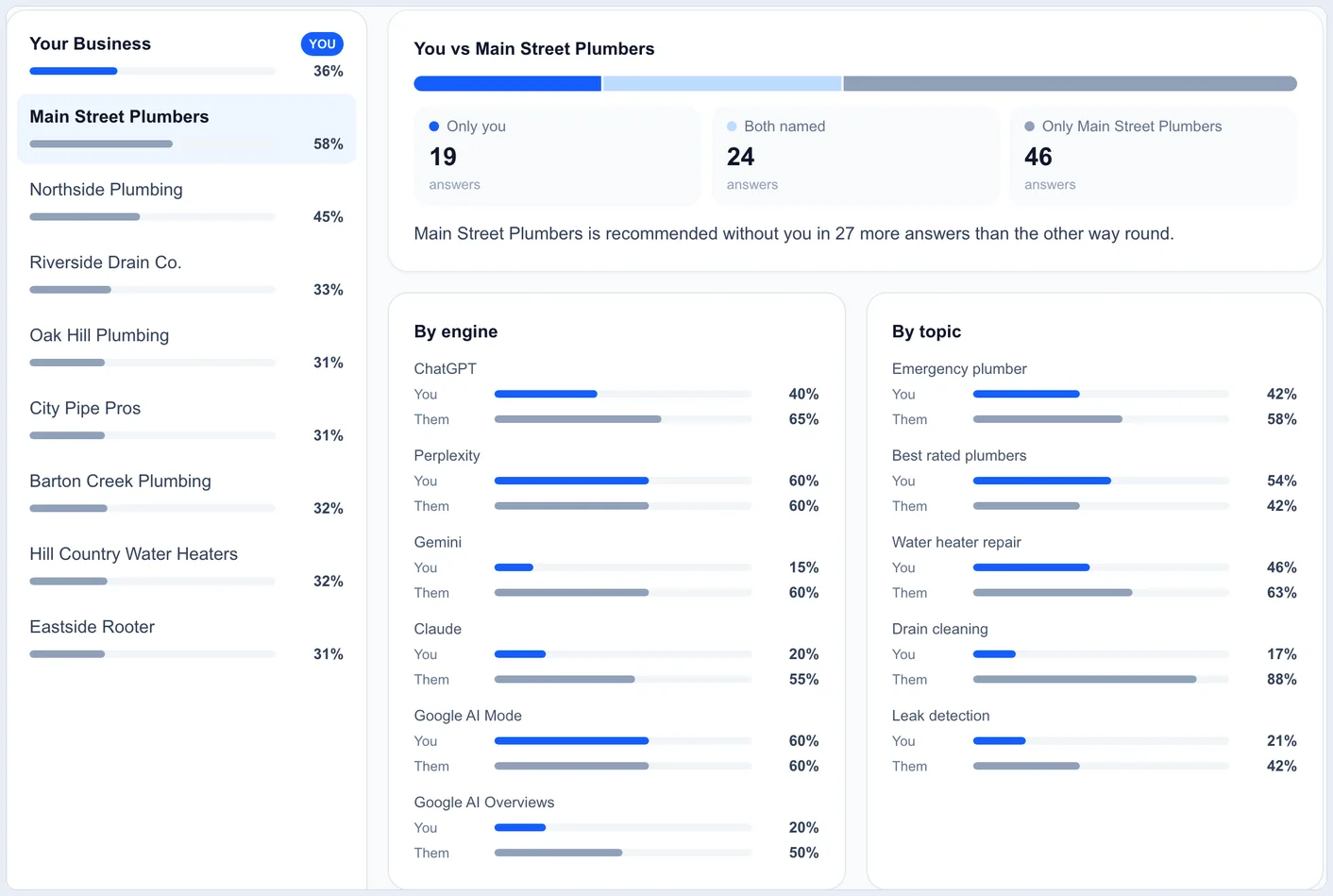
Competitors and the sources behind them
Named competitors matter less than why they're named. A useful report shows which sites the engines read for each answer, which of those sites name competitors without you, and how often your own site gets quoted. That's your target list for the fixes above.
Wrong facts checked against the listing
This is the check that's most tedious by hand and most valuable to the business. The tool should compare every phone number, address, set of hours, and website it finds in the answers with the Google Business Profile, and flag real contradictions only, not formatting differences.
A trend, and a report you can share
Look for scan-over-scan comparisons (questions won and lost, engines that moved, new competitors) and a read-only report link you can share with a partner, a manager, or a client without building slides. Scheduled scans matter too, so the history builds without anyone remembering to run it.
Glocavo's AI Visibility covers this list for local businesses, whether you track your own or a roster of clients. It asks all six engines, keeps the full answers, and shows the competitors and the sites the engines read. It checks wrong facts against the Google listing, writes fix plans for lost questions, and gives you shareable reports. It sits in the same workspace as the grid scans, and you can see the setup and what's included on the AI visibility tracker page. If you want to see exactly how it works first, the AI Visibility tutorials walk through creating a campaign and reading every part of the report, step by step.
One honest limit applies to every tool in this category, ours included: it reads the answers, it doesn't change them. The fixes in this guide are still your work.
A 30-day plan for a business that isn't being named
Here's a sequence for the first month, whether it's your own business or a new client, and whether you check by hand or with a tool. It front-loads the fixes that move fastest and sets expectations before anyone looks at results.
Week 1: the baseline and the wrong facts
Run the full check and save it as the "before" picture. Then fix every wrong fact you found, because it's the quickest win and the one with direct customer impact. Write down a plain summary, for yourself or for the client: named in X% of answers, strongest and weakest engine, and the wrong facts you're correcting.
Weeks 2 and 3: sources, one page, and reviews
Take the sites the engines cite most often without the business and get listed on them. Pick the question it loses most often and write one page that answers it properly. Start a review request that asks customers to name the service they got. Three focused changes beat ten scattered ones, because you can tell which one worked.
Week 4: compare, and see what moved
Run the check again with the same questions on the same engines. Look at the questions won and lost, the engines that moved, and any new wrong facts. Keep the framing honest: one month is the first data point in a trend, not a verdict.
The short version: AI visibility depends on what the web says about a business, the engines don't agree with each other, and the fixes are concrete. Get listed where the engines read, correct the facts, give them pages worth quoting, and measure it over several rounds instead of one. A good first step this week: run the by-hand check on your own business, or on the client you think is most at risk, and look at the sources before anything else.
What owners and agencies ask about AI answers
What is AI visibility?
AI visibility is how often AI engines such as ChatGPT, Perplexity, Gemini, Claude, and Google's AI Mode and AI Overviews name a business when someone asks for a recommendation. It covers whether the business is named, its position, who's named instead, and whether the facts stated about it are right. The work of improving it is usually called GEO, or generative engine optimization.
Is ranking on Google the same as showing up in AI answers?
No. A business can rank well in the local pack and organic results and still be missing from AI answers. The local pack ranks Google Business Profiles. AI answers are built from the pages an engine reads, so directories, review sites, and the business's own pages decide much more of the outcome.
How can I check whether ChatGPT recommends my business?
Ask each engine 10 to 20 questions a real customer would ask, with the city in the question, and record whether the business is named, its position, the competitors named, the sources cited, and any facts stated. Repeat it on a schedule, since one check is a snapshot.
Can you pay ChatGPT to recommend your business?
There's no way to buy a place inside the recommendation itself. The engines build their answers from what they read, so the paths in are the same ones in this guide: listings on the sites they cite, accurate facts, pages worth quoting, and reviews that describe the work.
How long does it take for AI answers to change after a fix?
Engines need time to read updated pages, so expect at least a round or two of checks before a fix shows up. Because answers vary from week to week anyway, judge progress over three or four rounds rather than reacting to a single result.
Is SEO dead now with AI?
No. Google's own guidance says the same SEO fundamentals apply to its AI features, with no special requirements. What changes is where the work points: beyond rankings, you now care which sites the engines read and whether they say the right things about your business.